Posts

Artifacts from archaeological expeditions to the ancient city of Ephesus on display at the Ephesos Museum in Vienna, Austria
Image
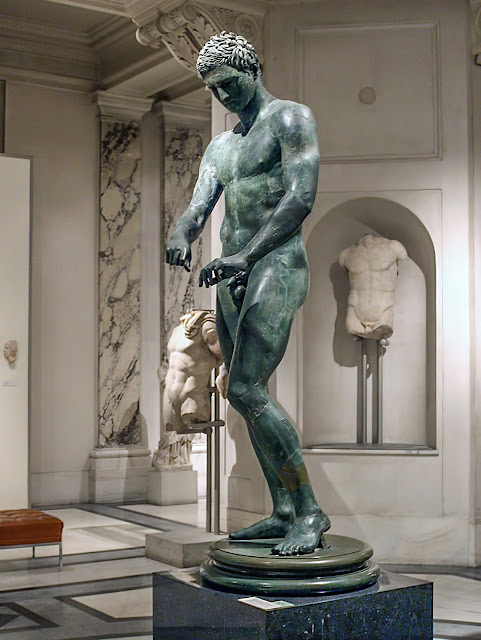
Artifacts from archaeological expeditions to the ancient city of Ephesus on display at the Ephesos Museum in Vienna, Austria. The Ephesos Museum in Vienna displays antiquities from the city of Ephesus, in modern-day Turkey. Begun in the late 19th century, the collection includes original works of sculpture and architecture from seven expeditions between 1896 and 1906. Works include remnants from the late-Classical Altar of Art emis, including a 4th century BCE sculpture of an Amazon, the Parthian Monument commemorating the campaigns of the Roman Emperor Lucius Verus, a model of ancient Ephesus, architectural and sculptural cult relics from the Sanctuary of the Great Gods, on the Greek island of Samothrace, and numerous sculptures including a Roman bronze of an athlete cleaning his strigil from the 1st century CE copied from a 4th century BCE Greek original. Image: Roman bronze of an athlete cleaning his strigil 1st century CE copy of 4th century BCE Greek original courtesy...

Art from the ancient Mediterranean, Africa, East Asia, Middle East, and the Americas at The Walters Art Museum in Baltimore, Maryland

Image
Art from the ancient Mediterranean, Africa, East Asia, Middle East, and the Americas at The Walters Art Museum in Baltimore, Maryland. The Walters Art Museum, with its 36,000 objects that span a broad arc of time, geography, and culture, has become a national leader in arts education and is totally free at all times for all members of the public. The Walters’ Conservation and Technical Research department, founded in 1934, is the third oldest museum laboratory in the country. Some of its outstanding artifacts include one of the largest collections of Roman sarcophagi in the U.S., the mummy mask of a handsome high official of the 11th dynasty of Middle Kingdom Egypt, and the glittering Greek gold of the Olbia Treasure. Image: Exquisite gold bracelet with garnets amethysts and emeralds from the Olbia Treasure in modern day Ukraine Greek 2nd-1st century BCE. Photographed at the Walters Art Museum. Note: If you are visiting Washington D.C., Baltimore is just a short train ri...

Jade objects from the Liangzhu culture through October 20, 2019 at the Palace Museum in Beijing, China

Image
Jade objects from the Liangzhu culture through October 20, 2019 at the Palace Museum in Beijing, China. The Liangzhu culture (3400–2250 BCE) was the last Neolithic jade culture in the Yangtze River Delta of China. The culture was highly stratified, as jade, silk, ivory and lacquer artifacts were found exclusively in elite burials, while pottery was more commonly found in the burial plots of poorer individuals. This division of c lass indicates that the Liangzhu period was an early state, symbolized by the clear distinction drawn between social classes in funeral structures. The Liangzhu culture was extremely influential and its sphere of influence reached as far north as Shanxi and as far south as Guangdong. The archaeological site of Liangshu was just inscribed as a UNESCO World Heritage Site on July 6, 2019. The exhibit displays 300 artifacts from museums across China including the Liangzhu king's yucong, a large jade cylinder with a hole in the middle, weighing 6.5 kilograms...

Museum of Walls, Rome Italy

Image
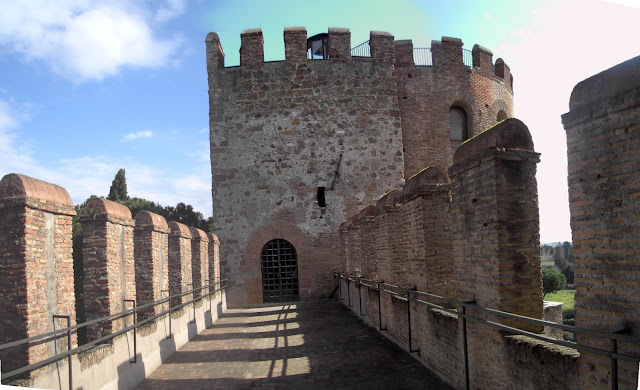
Museum of Walls, Rome Italy. The Museo delle Mura ("museum of the walls") is an archaeological museum housed in the first and second floors of the Porta San Sebastiano at the beginning of the Appian Way.  This free museum offers visitors the opportunity  to walk along the inside of one of the best-preserved stretches of the Aurelian Wall.  It provides a detailed history of wall construction in Rome and the surrounding areas, with information going back to one constructed in Ardea to the southeast of Rome in the 8th century. It describes the construction methods of the first Roman wall, built by Servius Tullius the legendary sixth king of Rome, the second wall constructed in the 4th century BCE after invasion of Rome by the Gauls, and the Aurelian Walls, constructed in the 3rd century CE, as well as subsequent work to raise the height of those walls and improve defenses using text, diagrams and models. Image:  The Porta San Sebastiano and a section of the Aure...

Finds from a 1st century CE Roman villa and military fortress at the Roman Museum of Lausanne-Vidy, Switzerland

Image
Finds from a 1st century CE Roman villa and military fortress at the Roman Museum of Lausanne-Vidy, Switzerland. The city of Lausanne, Switzerland began as a Roman military camp known as Lausodunon constructed in the 1st century BCE on the shores of Lake Geneva (then known as Lacus Lemannus) atop a previous Celtic settlement. By the 2nd century CE its collection of merchants, fishermen and artisans became known as vikanorum Lousonne sium. By 400 CE, the community had grown to the point it achieved the status of civitas Lausanna. In 1934 the remains of a sumptuous Roman domus were discovered and excavations began. Finds from the excavations are now housed in the Musée Romain Lausanne-Vidy opened to the public in 1993. Objects on display include coins, jewelry, ceramics, sculpture, and domestic tools as well as models of Roman structures that once existed at the site. Visitors can also explore the well of the atrium and a painted portion of the Roman house visible on the ground floor...

State Museum of Egyptian Art in Munich, Germany

Image
State Museum of Egyptian Art in Munich, Germany. This museum's collections include objects from all Egyptian periods from the prehistoric up to the Coptic Christian culture as well as archaeological finds from Nubia, Assyria and Babylon. Gold jewelry from the pyramid of Queen Amanishakheto as well as tomb models, Fayum mummy portraits, funerary masks, papyri, pottery, reliefs, sarcophagi and statuary, one of the most famous bei ng an Egyptianized statue of Antinous-Osiris, companion to the Roman emperor Hadrian, can be found in items displayed. Image: Antinous-Osiris, an Egyptianized portrait sculpture of the Roman emperor Hadrian's companion produced for the Villa Hadriana in 135 CE. Image courtesy of Wikimedia Commons contributor Rufus46.

Claudius Imperator: Messalina, Agrippina and the Shadows of a Dynasty through October 27, 2019 at the Ara Pacis Museum in Rome, Italy.

Image
Claudius Imperator: Messalina, Agrippina and the Shadows of a Dynasty through October 27, 2019 at the Ara Pacis Museum in Rome, Italy. The story of Claudius's life and works, told in an innovative setting enriched with images and a sprinkling of audio and visual excerpts, lies at the heart of the exhibition, but other characters that pepper the narrative – introduced through valuable works of art - are the protagonists of installations that will help to make visitor’s experience even more engaging. Enhanced by the updated work of historians and archaeologists, the exhibition trail at the Ara Pacis Museum, reveals an image of Claudius that is a little different from the dark and unflattering impression of him provided by those who wrote about him in ancient times. What emerges is the sense of an emperor able to take care of his people, to champion useful economic reforms and great public works, who also introduced legislation that contributed to the administrative development of ...