Posts

Showing posts with the label temple

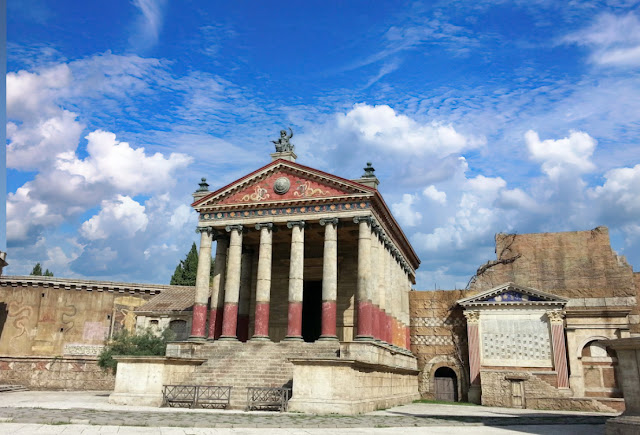
The Temple of Jupiter Optimus Maximus
Image
The Temple of Jupiter Optimus Maximus, also known as the Temple of Jupiter Capitolinus was the most important temple in Ancient Rome, located on the Capitoline Hill. It was surrounded by the Area Capitolina, a precinct where numerous shrines, altars, statues and victory trophies were displayed. The first building was the oldest large temple in Rome, and, like many temples in central Italy, shared features with Etruscan architecture. It was traditionally dedicated in 509 BCE but in 83 BCE was destroyed by fire.  A replacement in Greek style was completed in 69 BCE (there were to be two more fires and new buildings). For the first temple sources report Etruscan specialists being brought in for various aspects of the building, including making and painting the extensive terracotta elements of the Temple of Zeus or upper parts, such as antefixes. But for the second building they were summoned from Greece, and the building was presumably essentially Greek in style, though like other Rom...

The "Self-Crowning Athlete"

Image
This sculpture of a self-crowning athlete may have been offered in gratitude by an athlete following a victory.  It shows a young man placing an olive wreath on his head, a symbol of victory, but also a symbol of citizenship.  The "self-crowning athlete" came to represent democracy in ancient Athens where the right to self-rule could be earned through citizenship.   The relief was found at Sounion, within the territory of the Leontis tribe.  The earliest literary reference to Sounion is in Homer's Odyssey (III. 278–285). The story recounts that as the various Greek commanders sailed back from Troy, the helmsman of the ship of King Menelaus of Sparta died at his post while rounding "Holy Sounion, Cape of Athens." Menelaus then landed at Sounion to give his companion full funeral honors with a cremation on a funeral pyre on the beach.  Sounion was fortified in the nineteenth year of the Peloponnesian War (413 BCE) for the purpose of protecting the passage of ...

Roman Mithraism

Image
 Although scholars argue about whether Roman Mithraism arose in the 1st century BCE or the 1st century CE, Plutarch mentions the pirates of Cilicia were practicing secret rites of Mithras in 67 BCE. Plutarch says these pirates were especially active during the Mithridatic wars (between the Roman Republic and King Mithridates VI of Pontus) in which they supported the king. The association between Mithridates and the pirates is also mentioned by the ancient historian Appian. The 4th century commentary on Vergil by Servius says that Pompey settled some of these pirates in Calabria in southern Italy. However, the unique underground temples or mithraea appear suddenly in the archaeology in the last quarter of the 1st century CE.   The earliest monument showing Mithras slaying the bull thought to have been found in Rome bears an inscription that tells us it was dedicated by a certain Alcimus, steward of T. Claudius Livianus, commander of the Praetorian guard in 101 CE. The firs...