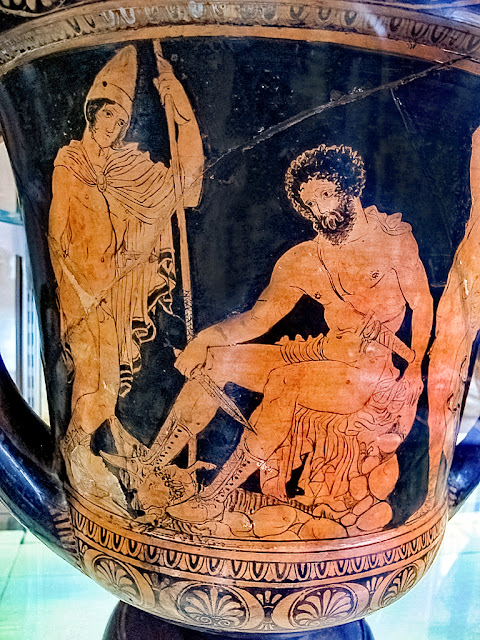
Calchas and the prophecies of the Iliad

Despite the addition of a head of Serapis, recut and restored in the 18th century CE, the overall scene of a relief at the J. Paul Getty Museum portrays Calchas, the Argive soothsayer to whom Apollo had given the gift of prophecy. In Homer’s Iliad (II.300-30), the seer foretold that the Trojan War would last for nine years after observing a snake devour a mother sparrow and her eight chicks. The eclectic style of the relief combines the form of a late Classical Attic stele with landscape elements drawn from the Hellenistic repertoire. It was discovered in 1774 at Roma Vecchia in the Villa dei Sette Bassi, which belonged to the senatorial family of C. Bellicus Calpurnius Apolaustus. Such a panel may have decorated a library assembled by a cultured patron well versed in Greek literature. On the underside is a Latinized Greek inscription that reads XEANTHE—likely a version of Xanthe, the former name for Troy. It was Calchas who prophesied that in order to gain a favourable wind...