Posts

Showing posts with the label red-figured

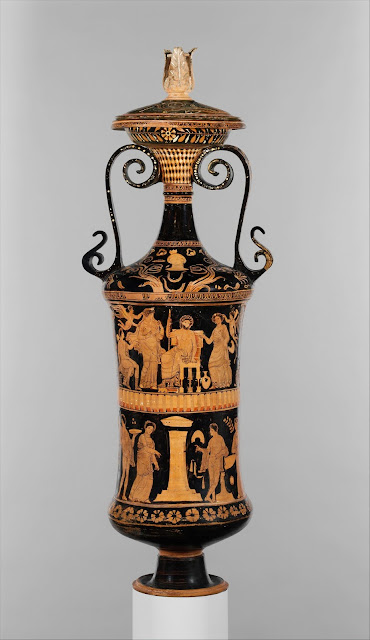
Terracotta loutrophoros (ceremonial funeral vase for water), Tarentine, 340–330 BCE, attributed to the Darius Painter, Apulian, south Italy
Image
The Tarentine predilection for disciplined yet exuberant embellishment is applied here to an imposing vase with deeply serious iconography. In the primary scene, Persephone and Aphrodite, who both laid claim to the beautiful hunter Adonis, await a judgment from the deity seated between them. He may be interpreted as Zeus or as Hades, ruler of the Underworld. Differing versions of the verdict allowed the hero to divide his time between the goddesses. In the zone below, a youth is isolated between a grave monument and a laver as figures approach from either side. The themes of death and the Underworld are complemented with luxuriant vegetation. The myth of the death and rebirth of Adonis is connected with seasonal change, and the abundant vegetation on this loutrophoros could symbolize rebirth, an appropriate theme for a funeral vase. - Metropolitan Museum of Art Apulian vase painting was the leading South Italian vase painting tradition between 430 and 300 BCE. Of the approximately 20,0...

Underworld: Imagining the Afterlife. Through March 18, 2019 at the Getty Villa in Malibu, California.

Image
Underworld: Imagining the Afterlife. Through March 18, 2019 at the Getty Villa in Malibu, California. Organized around a monumental funerary vessel on loan from National Archaeological Museum in Naples and recently conserved at the Getty Villa, this exhibition explores depictions of the Underworld in the art of Greece and southern Italy. The Underworld was a shadowy prospect for most ancient Greeks, characterized primarily by t he absence of life’s pleasures. Perpetual torment awaited only the most exceptional sinners, while just a select few—heroes related to the Olympian gods—enjoyed an eternal paradise. Initiation in the Eleusinian Mysteries, an annual festival in Greece, promised good fortune in both this world and the next. Outside of mainstream religious practice, devotion to the mythical singer Orpheus and the god Dionysos also offered paths to achieving a better lot after death. Beyond tales of famous wrongdoers and rulers of the dead, the objects on view highlight the desi...