The Lekythos: A vessel for beginnings and endings
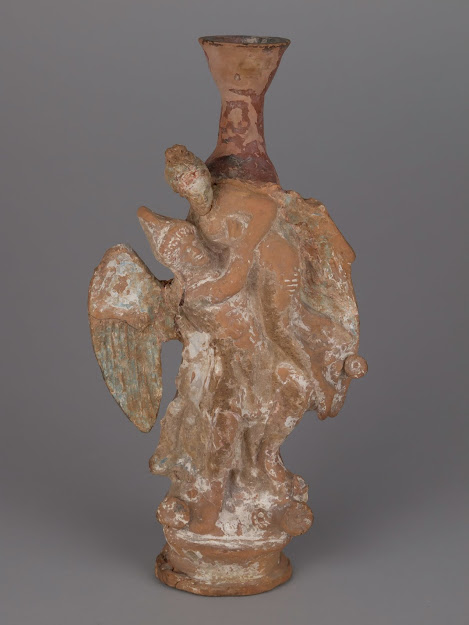
A lekythos, usually a narrow-bodied ceramic or stone vessel with one handle and no pouring lip, was used to store and dispense oil. Examples have been found dating as far back as 700 BCE. Although lekythoi were used to apply perfumed oil to the skin of a woman about to be married, they were most commonly used to anoint the bodies of the dead. Some scholars think their presence in tombs of unmarried women was to allow them to prepare for a wedding in the afterlife. The images on lekythoi were often depictions of daily activities, mythological scenes, or rituals. Because they were most often used in a funerary context, many depicted funerary rites or a scene of loss or departure. Some 5th century examples feature paintings on a white ground. Spanning barely a century, the “white-ground” style developed in Athens alongside the red figure technique. Although they appear to be minimally detailed outline drawings that some scholars think are due...