Roman athletics (as opposed to spectator sports)
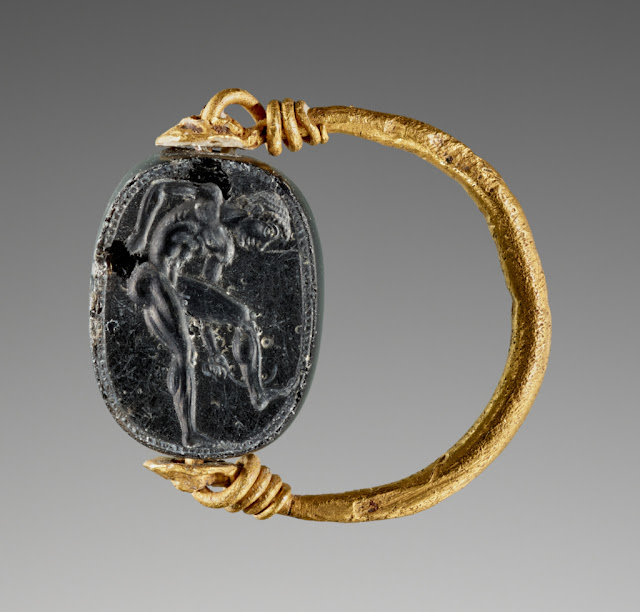
Depictions of athletes were popular on gems of the late 500s BCE and thereafter. Not only Greek but Etruscan artisans produced these miniature works of art and the collection of these gems became popular among the Roman elite. As I've mentioned previously, both Julius Caesar and Pompey the Great collected them. One such artist, Epimenes, from the Cyclades, produced scenes of nude youths with meticulously defined musculature in complex twisted poses. His youths sported locks of hair radiating from the crown of the head with clusters of curls on the forehead. He adopted these features from innovations in sculpture and vase-painting at the time. "It is clear that some form of amateur athletics must have taken place simultaneously with the real business at hand, which was, naturally enough from the bias of Republican Rome, training for war," observes classicist Donald White, University of Pennsylvania Museum of Archaeology and Anthropology. "Special ludi including spo...
