Posts

Showing posts with the label ancient America

The Olmecs - One of the Earliest Mesoamerican Cultures

Image
The Olmecs were the earliest known major Mesoamerican civilization. Following a progressive development in Soconusco, they occupied the tropical lowlands of the modern-day Mexican states of Veracruz and Tabasco. It has been speculated that the Olmecs derived in part from the neighboring Mokaya or Mixe–Zoque cultures. The Olmec appeared to practice ritual bloodletting and played the Mesoamerican ballgame, hallmarks of nearly all subsequent Mesoamerican societies. The antiquity of the Olmec civilization of ancient Mexico only became apparent with the advent of radiocarbon dating in the middle of the twentieth century. Olmec artists mastered an array of media and produced representations that range from refined miniatures in precious jadeite or wood, to monumental works in basalt. Now considered the first great sculptural tradition in the ancient Americas, these images remind us that naturalism is not necessarily the result of an evolution: Olmec sculptures often demonstrate a striking...

The ancient Colima culture of Mexico

Image
Archaeological evidence dates human occupation of the region of Colima, Mexico as far back as 1500 BCE. During the Los Artices era, which began around 500 BCE, shaft tombs and a distinctive ceramic style called rojo bruñido, or burnished red appeared. During the Comala phase, around 100 to 600 CE, the Comala perfected burnished red pottery and created representations of people and animals with skill and fluid lines. The best known are the so-called fattened dogs. Comala sites began to reflect the influence of Teotihuacan with the construction of monumental pyramids and plazas and the appearance of the gods Huehueteotl and Tlaloc. Playful Puppies earthenware 300 BCE-300CE Colima Mexico at the De Young Museum in San Francisco, California. Female standing figure, west Mexico, Colima, 300 BCE - 300 CE, earthenware, at the De Young Museum in San Francisco, California. Seated figure holding bowl, west Mexico, Colima, 300 BCE - 300 CE, earthenware, at the De Young Mus...

"Rhythm and Ritual: Music of the Ancient Americas" March 26 - August 15, 2020 at the Museo de las Americas in Denver, Colorado.

Image
"Rhythm and Ritual: Music of the Ancient Americas" March 26 - August 15, 2020 at the Museo de las Americas in Denver, Colorado. This exhibit includes 60 objects from the Denver Art Museum's ancient Americas collection dating from 1000 BCE to 1530 CE. It will also include 3D-printed versions of ancient instruments that visitors will be able to touch and play to provide a closer look at the musical cultural experiences of ancient  Mesoamericans. If you attend after June 6, you can also explore the ReVisión: Art in the Americas exhibit in the newly renovated Martin Building of the Denver Art Museum, too. This exhibit presents 180 objects from ancient America dating from 100 BCE to today. Image: Ancient Mesoamerican musical instrument on display at the Museo de las Americas in Denver, Colorado courtesy of the museum.

Museum of History of the Yucatan and Mayan culture in the Palacio Canton in Merida, Yucatan, Mexico

Image
Museum of History of the Yucatan and Mayan culture in the Palacio Canton in Merida, Yucatan, Mexico. The Palacio Canton was originally designed for General Francisco Canton in the early 1900s as his residence. Canton fought in the Caste War against rebel Mayan forces. He was also a successful cattle rancher, railroad entrepreneur, and governor of Yucatan between 1898-1902. The National Institute of Anthropology and History p urchased the building and, after an extensive rennovation in 2015, it is now considered one of the best regional museums about the Yucatan and Mayan Culture. Current exhibits include Mexicas, Chosen from the Sun, 120 sculptures, vases, reliefs, tombstones and ritual objects from the National Museum of Anthropology, Mexico City’s Templo Mayor, and the museum's own permanent collection. Image: Monumental sculpture in the Mexicas, Chosen from the Sun exhibit, courtesy of the museum.

Art from the ancient Mediterranean, Africa, East Asia, Middle East, and the Americas at The Walters Art Museum in Baltimore, Maryland

Image
Art from the ancient Mediterranean, Africa, East Asia, Middle East, and the Americas at The Walters Art Museum in Baltimore, Maryland. The Walters Art Museum, with its 36,000 objects that span a broad arc of time, geography, and culture, has become a national leader in arts education and is totally free at all times for all members of the public. The Walters’ Conservation and Technical Research department, founded in 1934, is the third oldest museum laboratory in the country. Some of its outstanding artifacts include one of the largest collections of Roman sarcophagi in the U.S., the mummy mask of a handsome high official of the 11th dynasty of Middle Kingdom Egypt, and the glittering Greek gold of the Olbia Treasure. Image: Exquisite gold bracelet with garnets amethysts and emeralds from the Olbia Treasure in modern day Ukraine Greek 2nd-1st century BCE. Photographed at the Walters Art Museum. Note: If you are visiting Washington D.C., Baltimore is just a short train ri...

Classical antiquities, ancient Asian and pre-Columbian American art ongoing at the Portland Art Museum in Portland, Oregon

Image
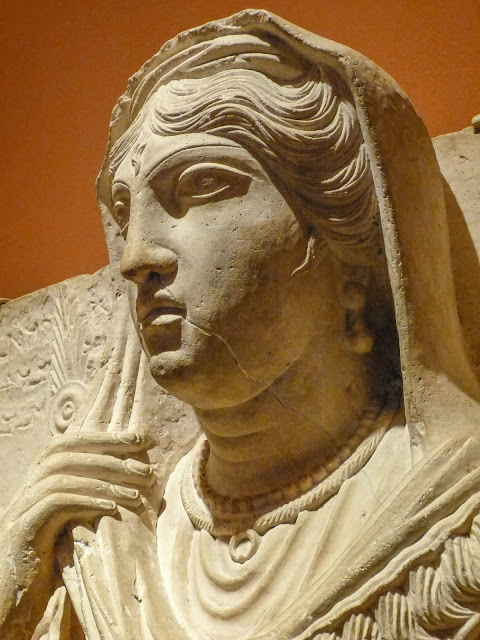
Classical antiquities, ancient Asian and pre-Columbian American art ongoing at the Portland Art Museum in Portland, Oregon. Museum founder Winslow B. Ayer purchased 100 plaster casts of Greek and Roman sculptures in 1895 to form the core of the museum's early European collection. These sculptures have been augmented over the years with a selection of Greek, Roman, and Etruscan objects, including red- and black-figure vases, sm all bronzes, funerary art including monuments from Palmyra, Syria and glassware. The museum's Chinese collection includes objects that date as far back as the Neolithic Period and include tomb objects from the Han (206 BCE - 220 CE) and Tang (618-907 CE) dynasties. In the last few years, major gifts of Han and pre–Han objects including an array of ceramic court nobles, dancers, and musicians — not to mention dogs, horses, and supernatural creatures have brought even more prominence to the museum's Asian collection. Roman Funerary Monument from ...

Art of Ancient America ongoing at the Gardiner Museum in Toronto, Canada

Image
Art of Ancient America ongoing at the Gardiner Museum in Toronto, Canada. The Gardiner Museum’s Ancient Americas collection is considered to be the foremost in Canada. It encompasses 47 separate cultures from the vast modern day geographical areas of the American Southwest, Mexico, Central and South America. Some of the cultures and people of these areas date back as far as 3500 BCE up to 1550 CE, just before the arrival of th e Spanish conquistadors. The low-fired earthenware vessels and sculptures are made without the use of the potter’s wheel and are decorated using various techniques. Some of these finishes are applied prior to firing, such as slip decoration, and others, including the application of resins and pigments, are added post-firing. The themes illustrated on the works are often influenced by the flora and fauna found in their highly varied environmental zones, from rugged highlands and arid deserts to humid tropical lowlands. Image: Michoacan (Mexico) Standi...

Arts of ancient West Mexico from the University of Iowa's Stanley Museum of Art now on display at the Figge Art Museum in Davenport, Iowa.

Image
Arts of ancient West Mexico from the University of Iowa's Stanley Museum of Art now on display at the Figge Art Museum in Davenport, Iowa. This collection is focused on the ceramic sculpture of ancient West Mexico, which is famed for its rich stylistic variety. The collection also contains objects from other ancient Mexican cultures, including brightly painted Mayan ceramics, stone figures from Guerrero, and delicately worked fi gures from Teotihuacan and Tlatilco. Other regions are represented as well, including the great textile traditions of ancient Peru and the jade and gold jewelry of Colombia. Objects in the collection include human figures depicted in their finery, animals fashioned into containers and whistles, stone markers used in ceremonial ball games, jewelry made of jade and gold, and elaborately painted vessels as well as ceramic sculpture that depict both ritual practices and aspects of daily life. Image: Fragment of a polychrome Ñuiñe effigy vessel 300-...

Ancient art from Egypt, the Near East, Scythia, Rome, Persia, China, Korea, and the Americas ongoing at the Saint Louis Art Museum in Saint Louis, Missouri

Image
Ancient art from Egypt, the Near East, Scythia, Rome, Persia, China, Korea, and the Americas ongoing at the Saint Louis Art Museum in Saint Louis, Missouri. Objects include ceramics, glassware, sculptures, masks, artitectural elements, weapons, funerary art and artifacts used in daily life. Image: A Bull's Head cast of solid copper from ancient Sumeria Early Dynastic III period, 2600-2450 BCE. The bull's massive head is emphasi zed by a stocky muzzle and shortened horns. The addition of a curled, wide beard looks curiously natural on an animal that symbolized the sky god An. As the embodiment of fertility and power, the bearded bull served as an ever-present symbol of divine protection and royal might through centuries of ancient Near Eastern art. Image courtesy of the Saint Louis Art Museum.

Ancient Greek, Roman, Asian, American and Mesopotamian Art at the Kimbell Art Museum in Fort Worth, Texas

Image
Ancient Greek, Roman, Asian, American and Mesopotamian Art at the Kimbell Art Museum in Fort Worth, Texas. The ancient collection of the Kimbell Art Museum spans the period from 3200 BCE to 1000 CE and includes sculpture, mosaics, utilitarian objects , funerary art and religious works that span the globe. The Kimbell's select holdings of antiquities range from the Egyptian Old Kingdom of the third millennium B.C.E, through ancie nt Assyria, Greece, and Rome, and to the Early Christian Church in the fifth century. Ancient American art is represented by Maya works in ceramic, stone, shell, and jade and includes Olmec, Zapotec, and Aztec sculpture as well as pieces from the Conte and Wari cultures. Ancient works from China, Korea, Japan, India, Nepal, Tibet, Cambodia, and Thailand comprise the ancient Asian art on view including sculptures, paintings, bronzes, ceramics, and works of decorative art. Image: Head of a Ewe 3200 BCE probably from a full sculpture of a sheep ...

Transformation: Art of the Americas through October 6, 2019 at The Walters Art Museum in Baltimore, Maryland

Image
Transformation: Art of the Americas through October 6, 2019 at The Walters Art Museum in Baltimore, Maryland. Transformation features approximately 20 works from indigenous American cultures, dating from 1200 bce to 1500 ce, that illustrate the metamorphosis of body and spirit. People of the indigenous Americas radically modified their bodies in the belief that altering their physical selves would transform them into deities and  supernatural beings. The objects on view, including gold jewelry, stone sculptures, musical instruments, and a painted ceramic burial urn, powerfully illustrate a fundamental worldview of the ancient Americas: that states of being—human, animal, and divine—were fluid and interchangeable. Image: Maya Polychrome Lidded Urn with Seated Figure 600-900 CE courtesy of the Walters Art Museum.

Ancient Art of the Americas, Africa, and Asia. Ongoing. At the Fowler Museum on the campus of the University of California, Los Angeles

Image
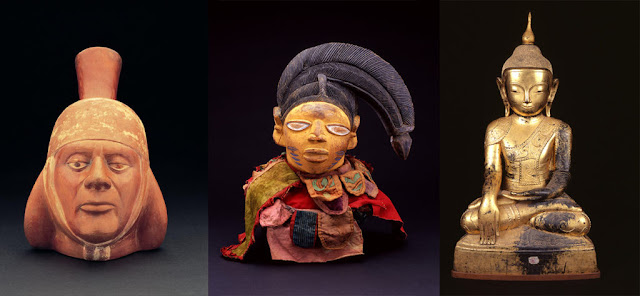
Ancient Art of the Americas, Africa, and Asia. Ongoing. At the Fowler Museum on the campus of the University of California, Los Angeles. - The Fowler’s collections comprise more than 120,000 art and ethnographic and 600,000 archaeological objects representing ancient, traditional, and contemporary cultures of Africa, Native and Latin America, and Asia and the Pacific.  The Fowler’s collections comprise more than 120,000 art and ethnographic and 600,000 archaeological objects representing ancient, traditional, and contemporary cultures of Africa, Native and Latin America, and Asia and the Pacific. From Yoruba beaded arts of Southern Nigeria, to pre-Columbian ceramic vessels of Peru. Read even more!