Posts

Showing posts with the label Nero

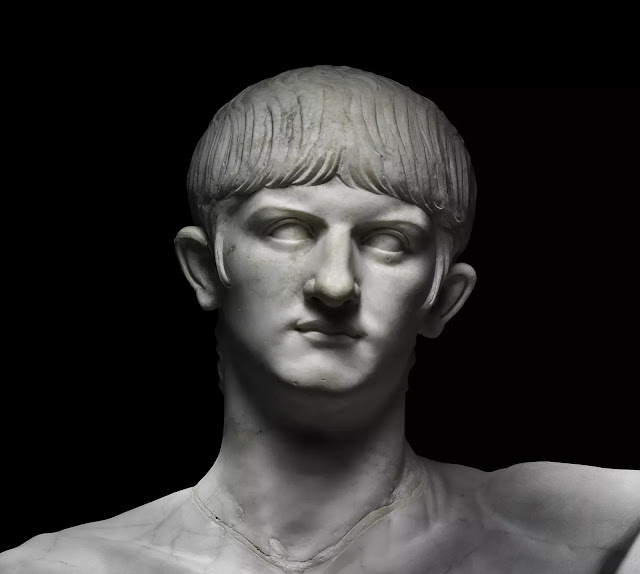
Nero: The Man Behind the Myth to open at the British Museum May 27, 2021
Image
An exhibition that will examine the misogynistic treatment of women under the reign of the emperor Nero is slated to open at the British Museum on May 27, 2021.  It will be on display until October 24, 2021. This "fresh look" at one of Rome's most notorious emperors will include more than 200 objects from the imperial palace in Rome to the streets of Pompeii that appear to contradict the traditional depiction of the “tyrant”, which is based on a “narrow range” of “brutally biased and partisan” sources. Part of the exhibition will also explore the role of imperial Roman women who were portrayed as adulterous and incestuous. Visitors will be able to see sculpture, manuscripts, objects destroyed in the 64 CE Great Fire of Rome, jewelry and even slave chains from Wales.  The Fenwick Hoard, a treasure discovered in 2014 beneath the floor of a shop in Colchester, will also be on display. Drawing on the latest research, this major exhibition questions the traditional narrative o...

Sea monsters in ancient art

Image
The iconography of the Greek kētos (Latinized as cetus) was established in the Archaic period (ca. 600–480 BCE) and remained amazingly consistent for centuries, long into Roman Imperial times. It is one of the creatures that after the conquests of Alexander the Great (r. 331–323 BCE) traveled to the East, where it appeared in Gandharan art and influenced representations of monsters from Afghanistan to India. The kētos has even been suggested as a partial inspiration for the Chinese dragon. - Metropolitan Museum of Art According to Greek mythology, Perseus slew Cetus to save Andromeda from being sacrificed to it. In a different story, Heracles slew Cetus to save Hesione.The term cetacean (for marine mammals like whales or porpoises) was derived from cetus. In Greek art, ceti were depicted as serpentine fish, sometimes with the head of a greyhound and the body of a whale or dolphin with a divided fan-like tail.  In Greek translations of the Hebrew Bible, Jonah's "great fish...

Cornice Block with Relief Showing the Baptism of Pharaoh (either Claudius or Nero), 41–68 CE, from the Temple of Harendotes on the island of Philae, Egypt, Roman Period at the Metropolitan Museum of Art

Image
This block originally formed part of a screen wall that connected the four front columns and the sidewalls of the temple of Harendotes ("Horus the Avenger") on the island of Philae. The relief represents the "Baptism of Pharaoh," a purification ritual that was part of Egyptian coronation ceremonies. The gods Horus (not preserved) and the ibis-headed Thoth, god of wisdom, pours water, represented by streams of the hieroglyphs ankh (life) and was (dominion), over the head of the king. The pharaoh whose head is partially preserved is a Claudian emperor, most probably either Claudius or Nero as defined in the strip of hieroglyphs along the top of the relief. As Pharaoh of Egypt, Nero adopted the royal titulary Autokrator Neron Heqaheqau Meryasetptah Tjemaahuikhasut Wernakhtubaqet Heqaheqau Setepennenu Merur ('Emperor Nero, Ruler of rulers, chosen by Ptah, beloved of Isis, the sturdy-armed one who struck the foreign lands, victorious for Egypt, ruler of rulers, chose...

Seated Buddha, early 2nd century CE, ancient Gandhara (modern day Pakistan)

Image
This small bronze Buddha is probably one of the earliest iconic representations of Shakyamuni from Gandhara. He sits in a yogic posture holding his right hand in abhaya mudra (a gesture of approachability). His unusual halo has serrations that indicate radiating light. His hairstyle, the form of his robes, and the treatment of the figure reflect stylistic contacts with the classical traditions of the West. This Buddha shows closer affinities to Roman sculpture than any other surviving Gandharan bronze. - Metropolitan Museum of Art, New York City. Buddhism developed as early as the 6th century BCE. But, before the late 1st to early 2nd century CE, the Buddha was represented by symbols and not in human form.  In this early human incarnation of the Buddha, he is shown with a mustache, considered a symbol of princely status.  This aspect, found only on very early depictions of the Buddha, was not included when representations of the Buddha in a variety of postures with varying ges...

Poppea Brings the Head of Octavia to Nero by G. Muzzioli, 1876, in a private collection

Image
Poppea Brings the Head of Octavia to Nero by G. Muzzioli, 1876, in a private collection. Octavia was the only daughter of the Emperor Claudius by marriage to his third wife, Valeria Messalina. She was named for her great-grandmother Octavia the Younger, the second eldest and full-blooded sister of the Emperor Augustus. She was born in Rome around 39 or 40, shortly before the assassination of Caligula.  As a young girl, her father betrothed her to future praetor Lucius Junius Silanus Torquatus, who was a descendant of Augustus.  After her mother, Messalina, was executed for conspiring to murder her father, Agrippina arranged for Octavia to marry Nero. Although Octavia was admired as empress by the Roman citizen body and viewed as an 'aristocratic and virtuous wife' (according to Tacitus), Nero hated her and tried on several occasions to strangle her (according to Suetonius).  When Poppaea became pregnant with Nero's child, Nero divorced Octavia claiming she was barren a...