Posts

Showing posts with the label Neo-Assyrian

The Napatan Period and Rome's clash with Kush

Image
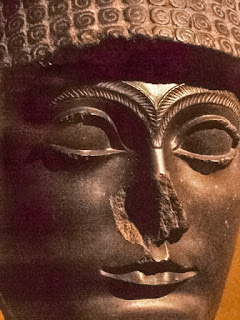
Napata was founded by Thutmose III in the 15th century BCE after his conquest of Kush. Napata’s location as the southernmost point in the empire led it to become an important religious center and settlement. In 750 BCE, during the political instability of the Third Intermediate Period, the Kushite ruler, Kashta, attacked Upper Egypt. His policy was pursued by his successors Piye, and Shabaka (721–707 BCE), who eventually brought the whole Nile Valley under Kushite control and ruled Egypt as the Twenty-fifth Dynasty. Religion, the arts, and architecture were restored to their Old, Middle, and New Kingdom forms under such pharaohs as Taharqa who built or restored temples and monuments throughout the Nile, including at Memphis, Karnak, Kawa, Jebel Barkal, and elsewhere. However the dynasty was relatively brief. Taharqa and his successor cousin, Tantamani were constantly in conflict with the Neo-Assyrian Empire. Neo-Assyrian emperor Esarhaddon conquered Lower Egypt about 670 BCE then enlis...

First Look: Mesopotamia: Civilization Begins at the newly reopened Getty Villa

Image
Today's featured "Antiquities Alive" virtual exhibit - The first batch of images from my friend Allan Gluck of the "Mesopotamia: Civilization Begins" exhibit at the newly reopened Getty Villa:   Head of a God, Neo-Sumerian, 2150-2000 BCE, Terracotta, now in the collections of the Louvre, courtesy of Allan Gluck Head of a Man, possibly a ruler, Sumerian, 2700-2600 BCE, Limestone, now in the collections of the Louvre, courtesy of Allan Gluck Head of a ruler, Amorite, about 1840 BCE, Gabbro, now in the collections of the Louvre, courtesy of Allan Gluck Bronze model of a chariot, Sumerian, 2900 - 2340 BCE, now in the collections of the Louvre, courtesy of Allan Gluck Plaque with King Gilgamesh killing the monster Humbaba, Amorite, 2000 - 1600 BCE, terracotta, now in the collections of the Louvre, courtesy of Allan Gluck Relief fragment with royal chariot and officers, Neo-Assyrian, 668-627 BCE, Gypsum, now in the collections of the Louvre, courtesy of Allan Gluck St...

Mesopotamia: Civilization Begins exhibit now open at the Getty Villa in Pacific Palisades, California

Image
The Getty Villa has reopened and is now hosting the special exhibit "Mesopotamia: Civilization Begins."  Some of the objects are from the Metropolitan Museum of Art in New York.  Others are on loan from The Louvre and the Bibliothèque Nationale de France. Ancient Mesopotamia, centered in present-day Iraq, occupies a unique place in the history of human culture. It is there, around 3400–3000 BC, that all the key elements of urban civilization first appear in one place: cities with monumental infrastructure and official bureaucracies overseeing agricultural, economic, and religious activities; the earliest known system of writing; and sophisticated architecture, arts, and technologies. For some three thousand years, Mesopotamia remained the preeminent force in the Near East. In 539 BC, however, Cyrus the Great captured Babylon and incorporated Mesopotamia into the Persian Empire. Periods of Greek and Parthian rule followed, and by about AD 100 Mesopotamian culture had effective...

Pre-Achaemenid art: Neo-Assyrian or Median?

Image
The Medes were an ancient Iranian people who spoke the Median language and who inhabited an area known as Media between western and northern Iran. Around the 11th century BCE, they occupied the mountainous region of northwestern Iran and the eastern region of Mesopotamia located around Hamadan (Ecbatana). Herodotus reports the Medes played a determining role in the fall of the Assyrian Empire and "could" have  formed an empire at the beginning of the 7th century BCE that lasted until the 550s BCE. It was originally thought they competed with the kingsoms of Lydia and Babylonia for hegemony.  However, the Medes left no written account of their history.  Archaeologists have had to rely upon foreign sources such as the Assyrians, Babylonians and Greeks for Median history, instead, as well as a few Iranian archaeological sites, which are believed to have been occupied by Medes. Some scholars have gone so far as to suggest a Median kingdom as a political entity never existed a...