Posts

Showing posts with the label Gilgamesh

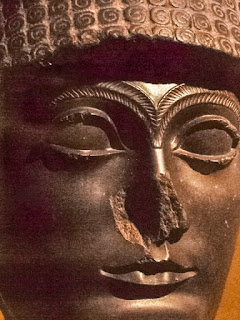
Mesopotamia: Civilization Begins exhibit now open at the Getty Villa in Pacific Palisades, California
Image
The Getty Villa has reopened and is now hosting the special exhibit "Mesopotamia: Civilization Begins."  Some of the objects are from the Metropolitan Museum of Art in New York.  Others are on loan from The Louvre and the Bibliothèque Nationale de France. Ancient Mesopotamia, centered in present-day Iraq, occupies a unique place in the history of human culture. It is there, around 3400–3000 BC, that all the key elements of urban civilization first appear in one place: cities with monumental infrastructure and official bureaucracies overseeing agricultural, economic, and religious activities; the earliest known system of writing; and sophisticated architecture, arts, and technologies. For some three thousand years, Mesopotamia remained the preeminent force in the Near East. In 539 BC, however, Cyrus the Great captured Babylon and incorporated Mesopotamia into the Persian Empire. Periods of Greek and Parthian rule followed, and by about AD 100 Mesopotamian culture had effective...

Achaemenid Lion Strangler at the Cleveland Museum of Art in Cleveland, Ohio

Image
Achaemenid Lion Strangler at the Cleveland Museum of Art in Cleveland, Ohio. A hero strangling a lion was an enduring motif in the ancient Middle East. Possibly referring to the myth of Gilgamesh or Herakles, it was considered a symbol of Persian royal power. As a royal symbol it was already fully developed in the art of the Protoliterate period beginning approximately in 3500 BCE. In its earliest manifestations, the lion str angler was thought to depict the hero protecting the sacred flocks of the goddess of fertility. This concept was gradually replaced by the idea it reflected the eternal conflict between man and beast where man represented the defender of order and civilized life against the the chaotic forces of nature. Likewise, Gilgamesh in the early Sumerian epic, slew several monsters including Huwawa and the Bull of Heaven in such symbolic contests. Eventually, though, the iconography of the lion strangler simply became a symbol of power favored by kings who viewed themse...