Posts

Showing posts with the label Bronze Age

A Brief History of Ships' Eyes

Image
(condensed from the Master's thesis of Troy Joseph Nowak, Texas A&M University, 2006, "Archaeological Evidence for Ship Eyes: An Analysis of Their Form and Function  ( https://nautarch.tamu.edu/pdf-files/Nowak-MA2006.pdf#:~:text=bows%20of%20ancient%20Greek%20ships%20between%20the%205th,guided%20the%20ship%20and%20helped%20to%20avoid%20hazards .) Between the Bronze Age and the 3rd century BCE, all types of watercraft used in the Mediterranean from small boats to large galleys were commonly adorned with eyes on their bows.  In Greece, the earliest clear depiction of a ship with eyes is a Late Helladic clay ship model decorated with circular eyes discovered at Phylakopi, Melos. However, ship representations with eyes do not reappear in the archaeological record again until the Geometric Period.  Excavations in the Dipylon cemetery at Athens have yielded an impressive collection of Late Geometric I [c. 760 to 735 BCE] ceramics decorated with ships. Eyes adorn the bows of ...

Wheeled cauldron stands

Image
I've photographed a number of huge bronze cauldrons, including spectacular examples found in the Midas Mound Tumulus at Gordion in Turkey. But I had never given any thought as to how these huge vessels were transported when full.  I had assumed they were carried manually by servants.  But today, while researching something else, I came across images of wheeled stands that were used to transport large cauldrons in ancient Cyprus.  Somehow I must have overlooked these interesting objects on my visits to both the British Museum and the Neues Museum in Berlin.   Bronze wheeled stand for a cauldron with an animal frieze on the ring and figures in the side panels. The panels depict a seated harp-player approached by a musician and a serving boy, a winged sphinx, a lion gripping a water bird by its neck, and a chariot, Cypriot, 13th or 12th century BCE, at the British Museum courtesy of Wikimedia Commons contributor George Groutas. Wheeled stand for a cauldron, bronze,...

Bound for Disaster - Pompeii and Herculaneum through September 13, 2020 at the Moesgaard Museum

Image
Bound for Disaster - Pompeii and Herculaneum through September 13, 2020 at the Moesgaard Museum in Højbjerg, Denmark.  This exhibition presents more than 250 objects on loan from seven Italian museums and cultural institutions. Visitors will be able to view reliefs and gravestones bearing inscriptions that provide vivid descriptions of and information about family relations, frescoes featuring maritime motifs, landscapes and everyday situations, military and maritime equipment and cargoes of commodities from distant destinations and the commercial harbour at Naples. There are also mosaics and marble statues, fountains and figures related to mythology and cult, together with jewellery and other luxury goods from the Romans’ high life before the cataclysm. The exhibition also includes exhibits demonstrating the terrible consequences of the volcanic eruption, including casts of corpses from Pompeii and skeletons of the dead from Herculaneum. This museum's permanent collections totalli...

Thracian art at the Tekirdağ Museum of Archaeology and Ethnography in Tekirdağ, Turkey

Image
Thracian art at the Tekirdağ Museum of Archaeology and Ethnography in Tekirdağ, Turkey. During excavations in the ancient cities of Heraion-Teichos (City of Hera) in Süleymanpaşa, Çavuşköy in Malkara and Perinthos in Marmaraereğlisi, many Thracian works have been discovered including jewelry, coins, weapons, reliefs and grave goods from the tomb of a Thracian king Kersopleptes. There are also silver vessels, candlesticks and sh ields from the Macedonian era as well as archaeological finds from the Early Bronze Age (3000-2500 BCE), Late Bronze Age (2000-1200 BCE), Early Iron Age (1400-1000 BCE), and the Hellenistic Period, Artifacts from the ancient Roman, Byzantine and Ottoman eras are also on display. Image: Gladiator Relief from Perinthos (ancient Marmara) courtesy of Wikimedia Commons contributor Ollios.

Roman-era mosaics in the Adana Archaeology Museum in Adana, Turkey

Image
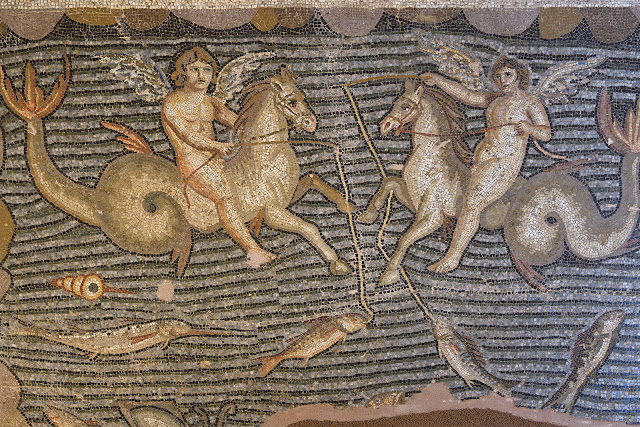
Roman-era mosaics in the Adana Archaeology Museum in Adana, Turkey.  Newly opened galleries at the Adana Museum now house an astonishing collection of Roman-era mosaics.  The mosaics depict an array of themes from classical mythology including Orpheus, Thetys, Artemis, and Erotes, as well as early Christian portrayals of the "Peaceful Kingdom" and Noah's Ark.  The museum has constructed elevated walkways in the new gallery space so visitors can view the expansive mosaics, many that once adorned church floors, more easily. The museum also has many objects from the Hittite period as well as artifacts from the Neolithic, Bronze Age, Iron Age, Archaic, Roman, Byzantine, and Ottoman eras.  Roman objects include sarcophagi, jugs, catapult shots, inscriptions, architectural elements, glassware, ceramics and jewellery. All images cc by courtesy of Dick Osseman:

A Millennium of ancient Roman culture at the Royal Ontario Museum in Toronto, Onatario, Canada

Image
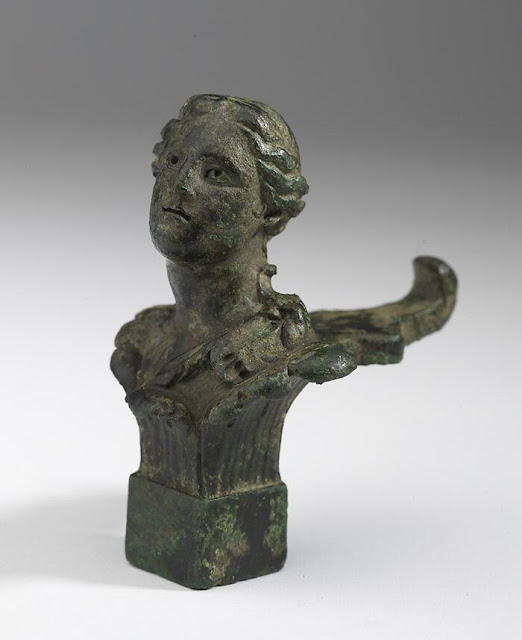
A Millennium of ancient Roman culture at the Royal Ontario Museum in Toronto, Onatario, Canada. The Eaton Gallery of Rome at the Royal Ontario Museum is home to a millennium of ancient Roman culture. It has the largest collection of classical antiquities in Canada, displaying more than 500 objects that range from marble or painted portraits of historical figures to magnificent Roman jewellery. The gallery also features the Bratty  Exhibit of Etruria that sheds some light on the Etruscans, a neighbouring civilization. The Joey and Toby Tanenbaum Gallery of Rome and the Near East depicts the lifestyle and culture of societies under Roman rule and their influence in the Near East and the Byzantine gallery reflects the history of the Byzantine Empire from 330 to 1453 CE. Other ancient cultures represented in the ROM's collections include ancient Cyprus, Egypt, Nubia, Bronze Age Aegean, and the Archaeic, Classical, and Hellenistic Periods of Greece. Image: Finial with the b...