Posts

Showing posts with the label 12th dynasty

Ancient Egypt Rediscovered. Ongoing. At the National Museum of Scotland in Edinburg, Scotland

Image
Ancient Egypt Rediscovered. Ongoing. At the National Museum of Scotland in Edinburg, Scotland. This new gallery showcases the depth and breadth of the National Museums' Ancient Egypt collection that originated with the first Egyptian objects added in 1819. Highlights will include the Qurna burial, the only intact royal burial group outside of Egypt, a gold ring said to have belonged to Queen Nefertiti and a unique double coffi n of two half-brothers, Petamun and Penhorpabik. The gallery is also planned to house the only white limestone casing stone from the Great Pyramid of Giza outside of Egypt that was discovered in a rubble heap by British engineer Waynman Dixon in 1872. Pendant of gold depicting an “upside-down catfish”, with an unknown core (possibly copper alloy) and a ring for suspension in its mouth: Ancient Egyptian, excavated by Petrie in Tomb 72 in Harageh Cemetery A, Late Middle Kingdom, 12th Dynasty, c.1862-1750 BCE . Box of cedar wood with ebony vene...
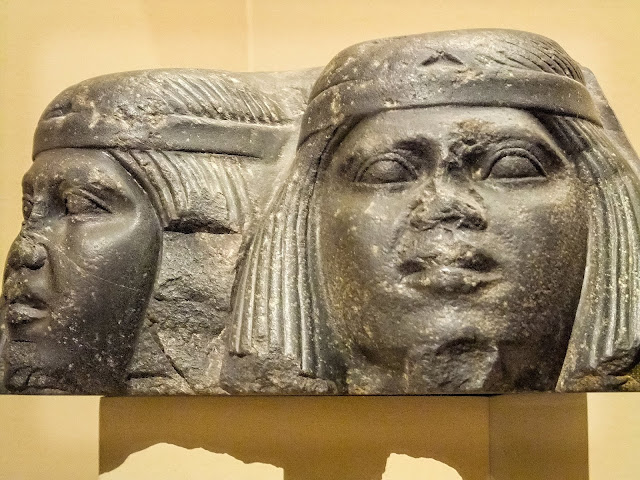
Passing through the Underworld: Egyptian Art from the Los Angeles County Museum of Art (LACMA) and the Vincent Price Art Museum.

Image
Passing through the Underworld: Egyptian Art from the Los Angeles County Museum of Art (LACMA) and the Vincent Price Art Museum. Heads of Prisoners Egypt 12th Dynasty 1878-1783 BCE Basalt photographed at the Los Angeles County Museum of Art in Los Angeles, California. Through December 8, 2018 - This exhibition, drawn from LACMA’s permanent collection and two artworks from the collection of the Vincent Price Art Museum, presents an introduction to Egyptian art with a focus on myth and funerary practice. The exhibition features coffins, a mummy, and mummy masks, along with objects from tombs that provide insight into Egyptian funerary practice. Images of deities illuminate Egyptian creation mythologies and understandings of the afterlife, while priestly insignia and tools reflect the rituals of Egyptian temple life. Depictions of animals illustrate popular beliefs and religious practices, and royal statuary represents rulers and activities of the court. Other objects in the ex...